-Main.svg)
Do you know how to avoid copyright Facebook strikes?
Navigating the digital sphere of content creation and sharing can feel like walking through a minefield, particularly when it comes to copyright issues.
Facebook, a major player in social media, has implemented robust systems to identify and punish copyright infringements.
Even the most well-meaning users can find themselves unexpectedly at the receiving end of a Facebook strike, often leading to confusion and frustration.
This guide aims to demystify Facebook’s copyright policies and provide clear, actionable advice on avoiding such penalties.
Whether you’re an individual sharing your favorite music tracks or a business promoting your products, understanding and respecting these rules is vital to keeping your Facebook account in good standing.
So, without further ado, let’s dive into the essentials of avoiding copyright strikes on Facebook.
What is a Copyright Strike on Facebook?
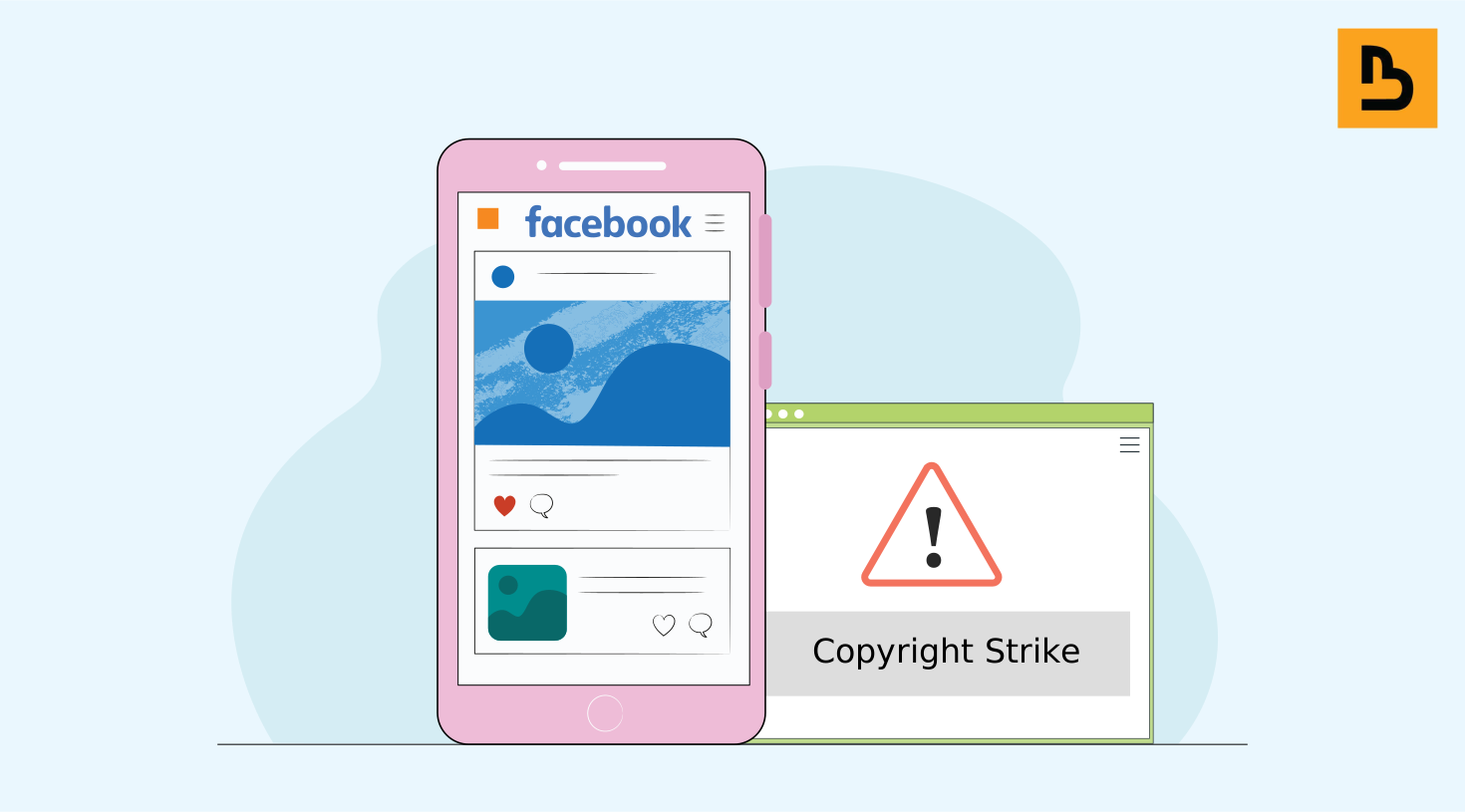
A copyright strike on Facebook is a disciplinary action taken against users who have infringed upon someone else’s copyrighted content.
When Facebook acts on an infringement, either through its automatic matching systems or after a report filed by the copyright owner, the account that posted the content can be penalized: people often call this a copyright strike.
These strikes are essentially warnings that the user has broken Facebook’s rules on intellectual property.
Facebook’s policy on copyright infringement is strict.
It can respond in several ways: removing the post, muting or blocking a video, or restricting the account.
Ultimately, Facebook can disable the accounts of people who keep posting infringing content.
Examples of Copyright Strikes on Facebook
Facebook copyright strikes can occur in a variety of scenarios, typically when you share or use copyrighted content without proper permissions. Here are some common examples:
Sharing Music or Videos: If you share a music track or a video that contains copyrighted music or video footage without permission from the owner, you could receive a strike.
Using Copyrighted Images: Posting a copyrighted image, such as a professional photograph or artwork, without obtaining permission or licensing rights from the owner, can lead to a strike.
Live Streaming Copyrighted Content: Live streaming copyrighted content like concerts, TV shows, movies, or sporting events without the necessary rights can result in a strike.
Posting Copyrighted Written Material: Sharing copyrighted written material, such as excerpts from books, articles, or blogs, without permission can also trigger a strike; crediting the author isn’t enough.
Unlicensed Software or Games: Sharing links or files for unlicensed software or games could also result in a copyright strike.
How to Avoid Copyright Facebook Strikes?
Avoiding copyright strikes on the platform largely involves being aware of what constitutes copyright infringement and actively taking steps to ensure you’re not unknowingly violating these rules. Here are some steps you can follow:
Use Original Content
The best way to avoid strikes is to use content that you’ve created yourself.
If you’ve written the blog post, taken the photograph, recorded the video or composed the music, you own the copyright and can share it freely.
Obtain Permission
Permissions can often be done by contacting the content creator or owner directly, or through licensing agencies.
Be sure to keep records of any permissions granted.
Don’t rely on disclaimers: writing “no copyright infringement intended” or “all rights go to the owner” doesn’t give you the right to post someone else’s content, as Facebook’s own help pages point out.
Understand Fair Use
“Fair use” is a legal doctrine that allows limited use of copyrighted material without permission for purposes such as criticism, news reporting, teaching, and research. It’s a US doctrine decided case by case, and India’s “fair dealing” rules are narrower, so don’t count on it for whole songs, clips or posts.
Use Royalty-Free or Creative Commons Licensed Content
There are many resources for content that is specifically designed to be used freely.
Websites like Unsplash or Pixabay offer free-to-use images, and Facebook’s own Sound Collection offers music and sound effects you can use free in videos on Facebook and Instagram.
Similarly, some content is available under Creative Commons licenses, which typically allow for free use with certain conditions.
Be Careful with Livestreams
If you’re livestreaming on Facebook, ensure that you have the rights to broadcast all the included material, including background music and TV shows.
This is a common source of inadvertent infringement.
Educate Yourself on Copyright Laws
Facebook’s policies are based on established copyright laws.
Conclusion
In conclusion, steering clear of strikes on Facebook necessitates an understanding and respect for intellectual property rights.
It’s about appreciating the hard work, creativity, and legal rights that go into producing content, and ensuring that we acknowledge these when sharing and using content on our platforms.
Knowledge is power, so let’s use it to cultivate a respectful and legally sound online environment.
Frequently Asked Questions
What is a copyright strike on Facebook?
A strike on Facebook is a penalty imposed on users who infringe upon copyrighted content.
Repeated infringements can lead to severe consequences, including account suspension.
How to Avoid Copyright Facebook Strikes?
The best ways to avoid strikes include using original content, obtaining necessary permissions from the owner for any content you didn’t create.
Understanding and correctly applying “fair use” principles, using royalty-free or Creative Commons licensed content.
Especially being particularly cautious with livestreams to ensure all content is properly licensed.
What happens if I get a copyright strike on Facebook?
If you receive a copyright strike, it serves as a warning that you’ve violated Facebook’s copyright policies.
If it keeps happening, Facebook can permanently disable your account.
Can I dispute a copyright strike on Facebook?
Yes. If you believe the content was removed by mistake, for example because you own it, have a license or your use is a fair use, you can appeal using the notice Facebook sends you.
If it was removed under the US DMCA, you can submit a counter-notification.
Does fair use protect me from a copyright strike on Facebook?
Using the content for criticism, commenting, reporting etc may be considered as the fair use of the content.
However, determining what constitutes fair use can be complex and is not always a guarantee against copyright strikes.