-Main.svg)
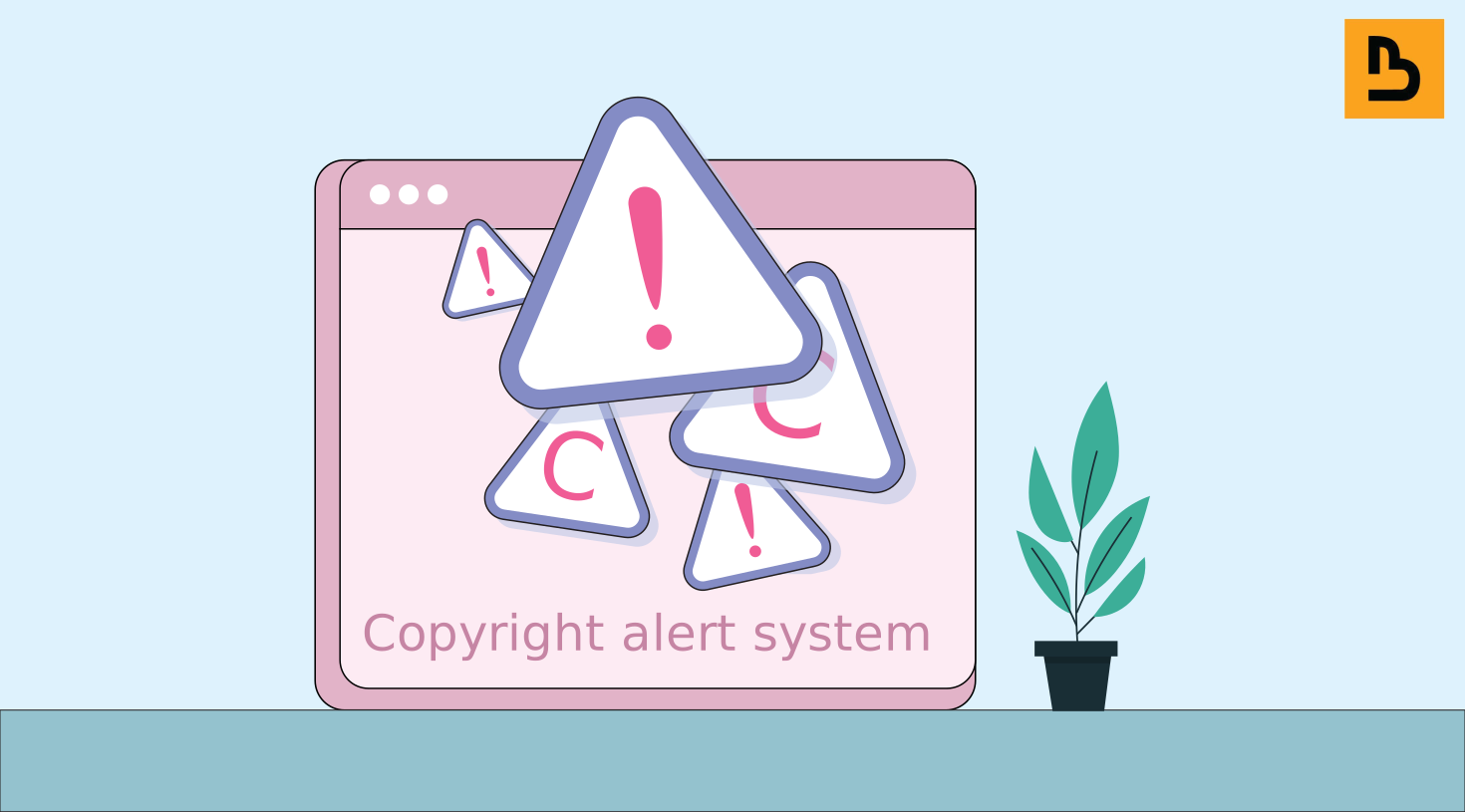
The Copyright Alert System (CAS) was a US anti-piracy program, run from 2013 to January 2017, that was designed to protect the rights of creators in the digital era.
In a world where online content is easily shared and reproduced, the CAS was meant to encourage respect for intellectual property.
Developed by content owners and internet service providers, the system aimed to detect and address copyright infringement on peer-to-peer networks.
By issuing alerts to users found engaging in unauthorised sharing or distribution of copyrighted material, the CAS aimed to promote awareness, education, and responsible digital practices.
This guide explains how the CAS worked and what it covered.
What is the Copyright Alert System?
CAS refers to an anti-piracy initiative introduced in 2011 by the Center for Copyright Information (CCI) in the United States. It sent its first alerts in 2013 and was shut down in January 2017.
Spearheaded by representatives from the Motion Picture Association of America (MPAA) and the Recording Industry Association of America (RIAA), this strategy aimed to combat illegal file sharing.
Under CAS, content owners collaborated with Internet Service Providers (ISPs) to identify subscribers engaged in copyright infringement by sharing pertinent information, such as IP addresses.
ISPs subsequently investigated these cases and could take appropriate actions against the offending subscribers to address the issue of unauthorised file sharing.
The Intention Behind the CAS
CAS was initially designed to establish a consumer-centric approach.
It aimed to identify and notify residential wired Internet access service customers (excluding dial-up subscribers) of participating ISPs that had received multiple allegations of online infringement related to P2P networks and applications.
The primary objectives of CAS were to educate consumers, discourage online infringement, and guide them towards lawful sources of online content.
The CCI believed that CAS would effectively reduce both intentional and unintentional copyright infringement.
The goal of the CCI was to educate those who infringed on copyright laws about the potential consequences and encourage them to seek out legitimate online content providers.
Furthermore, the CCI anticipated that individuals who were unknowingly involved in infringement, such as
- those whose home networks were compromised by unauthorised users, or
- parents unaware of their children’s infringing activities,
would utilise the knowledge of their account’s involvement to prevent further infringement by addressing the issue with the account users.
Additionally, CAS aimed to foster greater parental engagement by alerting them to any misconduct or abuse occurring through their accounts.
Critics, such as the Electronic Frontier Foundation (EFF), raised concerns about the educational materials provided to consumers, describing them as more akin to propaganda.
They also argued that the framework of CAS potentially violated the principle of presumption of innocence.
How Does it Function?
The functioning of the CAS involved several key steps.
When a user engaged in illegal downloading of copyrighted music, movies, or games, the corresponding entertainment company notified the Internet Service Provider (ISP) associated with that user.
Subsequently, the ISP sent a notice to the customer, informing them about the potential consequences of downloading pirated material.
The term “Six Strike” referred to the possibility that an ISP might suspend a user’s service after sending six notices.
It is important to highlight that ISP participation in CAS was voluntary, as were the actions taken when a customer was accused of piracy.
Furthermore, the CAS did not provide protection for consumers who might face lawsuits from copyright owners.
It should be noted that CAS specifically addressed the act of downloading copyrighted material and did not encompass other forms of online sharing, such as
- email attachments or
- cloud-sharing services like Dropbox
Alert System: Steps and Measures
The CAS implemented a series of alerts to address alleged copyright infringement.
Here is an overview of the alert system’s progression:
First and second alerts:
ISP subscribers were notified about allegations of copyright infringement related to their Internet accounts.
These alerts included information on how to prevent future offenses and directed users to legitimate content platforms.
Subsequent alerts:
If the suspected infringement persisted, additional alerts were sent to the subscriber.
These alerts required acknowledgment of receipt by clicking a notice, indicating that the messages were received and understood.
Fifth alert:
At this stage, ISPs were permitted to implement “mitigation measures” aimed at preventing future infringements by the subscriber.
Sixth Alert:
If mitigation measures were not implemented by the ISP after the fifth alert, it was mandatory for them to take action upon receiving the sixth alert.
The specific measures were determined by the ISP and could include temporary reductions in Internet speeds, redirecting users to a landing page until they contacted the ISP to discuss the matter, or presenting educational information about copyright infringement.
Each ISP had its own policies regarding the exact mitigation measures employed.
It’s important to note that the specific actions taken as part of the mitigation measures varied among companies participating in CAS.
Scope of the Problem
The motion picture and music industries face a significant challenge in addressing unauthorised content distribution.
A 2007 study by the Institute for Policy Innovation, widely cited by the film and music industries, estimated that piracy of films, music, software and video games cost the U.S. economy $58 billion a year in output and more than 373,000 jobs.
Protecting the latest blockbuster movies and popular TV shows from unauthorised distribution online is a complex task.
Efforts to address this matter have been made in the past, such as legislative proposals like SOPA and PIPA which were unsuccessful.
Other approaches have involved legal actions initiated by private entities and government-led efforts to combat internet-based intellectual property theft.
Among these efforts was a privately funded solution known as the Center for Copyright Information (CCI), which ran the “Copyright Alert System” as its centerpiece.
One may come across a downloadable version of a highly anticipated movie on a peer-to-peer network while searching for it.
Tempted, you proceed to download and watch the film.
However, your actions do not go unnoticed.
Soon after, you receive a notice from your ISP informing you that your download was illegal and warning of potential consequences if you continue such activities.
That is how CAS worked from 2013 until it ended in January 2017.
Appealing Copyright Alerts: Grounds for Challenge
Subscribers had the option to challenge copyright alerts based on specific pre-defined grounds within the Copyright Alert System (CAS).
The following grounds could be invoked in an appeal:
- Misidentification of Account: The subscriber could argue that their account was wrongly identified as the source of copyright infringement, asserting that they were not involved in the alleged activity.
- Unauthorised Use of Account: Subscribers could claim that the infringement occurred due to unauthorised and uncontrollable use of their account by others, without their knowledge or consent.
- Authorisation: If the subscriber had explicit written authorisation from the copyright holder or a licensed entity to use the work in question, they could challenge the alert based on this ground.
- Fair Use: Subscribers could argue that their use of the work identified in the alert fell within the legal definition of fair use as per U.S. copyright law.
- Misidentification of File: In cases where the file primarily contained non-infringing material rather than the alleged copyrighted work, subscribers could contest the alert on the grounds of misidentification.
- Work Published Before 1923: If the work mentioned in the alert was published prior to 1923, rendering it in the public domain in the United States, subscribers could challenge the alert accordingly.
During the appeal process, it was the responsibility of the subscriber to provide evidence and demonstrate the elements of one of the above grounds to support their challenge.
The burden of proof rested on the subscriber to establish a valid reason for contesting the copyright alert.
Limited ISP Participation in the Copyright Alert System
Unlike the legally mandated “Three Strikes” law in France, the “Six Strikes” program operated on a voluntary basis.
ISPs had the choice to participate in this private initiative, partnering with organisations like the RIAA and MPAA.
Five ISPs took part: AT&T, Cablevision, Comcast, Time Warner Cable, and Verizon.
It’s important to note that participation in the Copyright Alert System was selective, with a limited number of ISPs involved in its implementation.
Exclusions from the Copyright Alert System’s Scope
Although marketed as a “Copyright Alert System,” the program focused on peer-to-peer sharing over public BitTorrent networks, on the residential connections of participating ISPs.
Other forms of infringement, such as streaming from illegal sites, file-locker downloads and other file-sharing networks, fell outside it. They were, and remain, infringement: rights holders pursued them through takedown notices, lawsuits and other means, and still do now that the program has ended.
Copyright Alert System and Businesses: Exemptions and Recommendations
CAS’s impact on businesses varied with the type of internet connection they used.
Here is how it applied:
- Business-grade Internet connections: CAS did not target businesses operating on business-grade Internet connections, so businesses using such connections were not sent copyright alerts. This included businesses offering public Wi-Fi services where some customers might have downloaded unauthorised material.
- Consumer-grade Internet connections for small businesses: If a small business operated on a consumer-grade Internet connection, it could receive copyright alerts under CAS. This applied even if the business offered public Wi-Fi services using a residential connection.
In such cases, ISPs might recommend that these businesses upgrade to more robust and suitable connections specifically designed for businesses.
Consequences
The consequences following the sixth alert under the CAS might come as a surprise – no additional alerts were issued.
However, it’s important to note that subscribers could still face potential lawsuits from copyright owners, just as they could have prior to the implementation of CAS.
CAS primarily aimed to deter what is often referred to as “casual infringers,” while leaving more severe cases of infringement to be resolved through legal action in the courts.
It served as a preventive measure to raise awareness and discourage unauthorised sharing, but it did not eliminate the possibility of legal repercussions for copyright infringement.
Conclusion
CAS was introduced as a private initiative aimed at addressing online copyright infringement by educating and deterring consumers.
While it targeted unauthorised downloading from public BitTorrent trackers, CAS had limitations in its coverage of other forms of copyright infringement, such as unauthorised uploads on video-sharing platforms or direct downloads from file locker websites.
CAS operated through a system of alerts, gradually escalating in seriousness and potential consequences.
It provided opportunities for subscribers to challenge alerts based on specific grounds, shifting the burden of proof onto the subscriber during the appeal process.
However, the effectiveness of CAS in reducing intentional and unintentional infringement remained a subject of debate, with critics highlighting concerns about the educational materials and potential infringement of the presumption of innocence.
It’s important to note that CAS was a voluntary program adopted by select Internet Service Providers (ISPs), and its scope and impact varied among participating ISPs.
The evolving nature of copyright infringement and the complexities of enforcing copyright online necessitate ongoing efforts to address the challenges in a balanced manner, considering the rights of copyright holders and the interests of consumers.
As technology and the digital landscape continue to evolve, it is essential to explore comprehensive and effective approaches that promote legal content consumption, protect intellectual property, and strike a fair balance between the rights of copyright holders and the rights of individuals in the online world.
FAQs
How does the Copyright Alert System (CAS) work?
CAS, which ran from 2013 until January 2017, worked by monitoring infringing activity on public BitTorrent networks.
Content owners passed this information to participating ISPs, who then sent alerts to the subscribers concerned.
What are the consequences of receiving copyright alerts?
The consequences of receiving copyright alerts could include educational materials, acknowledgment requests, and potential mitigation measures by ISPs, such as temporary Internet speed reductions or redirection to informational pages.
Can I challenge a copyright alert?
While CAS ran, subscribers could challenge copyright alerts on specific grounds, such as misidentification of the account, unauthorised use of the account, fair use, or misidentification of the file.
The burden of proof lay with the subscriber during the appeal process.
Does CAS target all forms of copyright infringement?
CAS focused on illegal downloads from public BitTorrent networks.
Other forms of infringement, such as unauthorised uploads on video platforms or direct downloads from file locker websites, were outside CAS. They remained infringement, and rights holders pursued them by other means; the program itself ended in January 2017.
What is the goal of CAS?
The goal of CAS was to educate and deter subscribers from engaging in copyright infringement.
By raising awareness, providing information, and implementing graduated alerts, CAS aimed to promote lawful content consumption and respect for intellectual property rights.