-Main.svg)
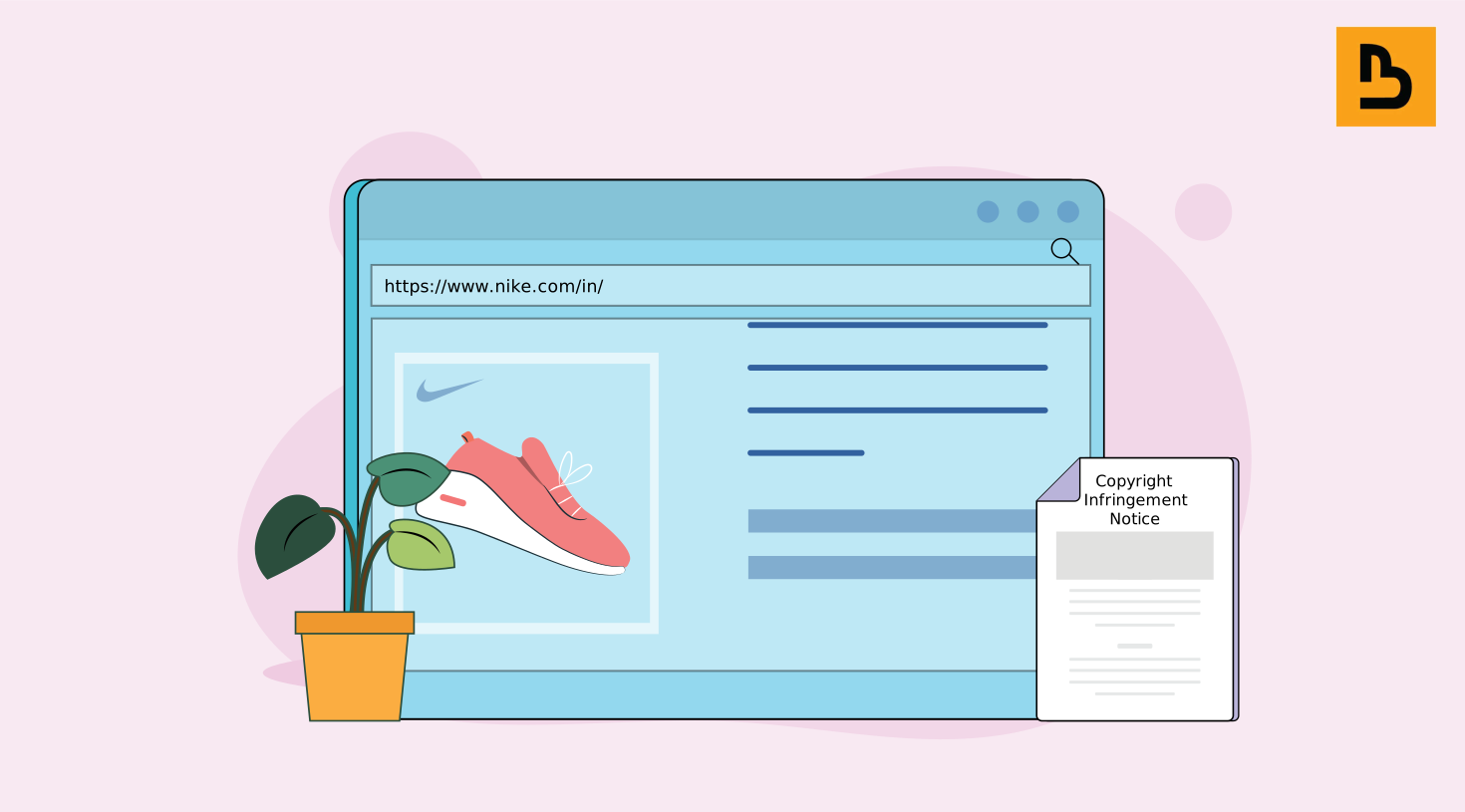
Do you know how to report Nike copyright infringement?
Today, we’re navigating the complex world of intellectual property rights. Specifically, we’ll tackle an issue that often flies under the radar: copyright infringement of products.
This giant of the sports industry has a vast range of products and designs under its belt, and, unsurprisingly, it becomes a target for counterfeiters and copyright violators.
But how do we, as responsible consumers and supporters of creativity, stand up against this issue?
In this post, we will provide a comprehensive guide on how to report Nike copyright infringement effectively.
We aim to not only arm you with knowledge about intellectual property rights, but also offer step-by-step guidance on protecting the brand that we know and love.
Whether you’re a fan of the iconic swoosh, a dedicated customer, or someone just looking to do their part in fighting against counterfeit crime, this article is for you.
So let’s dive in and learn how we can make a difference, one report at a time.
Nike Copyright Infringement
People often say “Nike copyright infringement” for any misuse of Nike’s brand, but two kinds of rights are involved: copyright protects Nike’s creative work, such as its advertising, photos and website content, while the Nike name, the Swoosh and “Just Do It” are protected as trademarks. Infringement could include:
Counterfeit Products: The manufacture, distribution, or sale of counterfeit Nike goods is a serious form of intellectual property infringement.
These are often low-quality replicas designed to look like genuine Nike products, such as shoes, clothing, or accessories, that use the Nike logo or designs without authorisation.
Unauthorised Use of Logos or Designs: Using the logo, “Swoosh”, other brand insignias, or any unique design elements that are exclusive to Nike, on products, in advertising, or any other commercial manner without Nike’s explicit permission, is trademark infringement, and copying Nike’s artwork or designs can also infringe its copyright.
Plagiarism of Marketing Materials: Replicating Nike’s marketing materials, such as advertisements, product descriptions, or other proprietary content without Nike’s consent, is another form of copyright infringement.
Copyright infringement not only applies to exact copies but can also apply to any work that is substantially similar to the copyrighted work.
If you have questions about whether something constitutes copyright infringement, it’s best to consult with a legal expert in intellectual property rights.
Further Reading: What is Copyrighted Material
What is Nike Copyright Infringement Report?
Nike copyright infringement involves the unauthorised use or replication of Nike’s protected material, which typically includes their logo, designs, product images, or marketing content.
The company invests a significant amount of resources into its creative processes, and when individuals or businesses illegally copy these assets, it infringes on Nike’s intellectual property rights.
A Nike copyright infringement report is simply a report to Nike of a suspected infringement of its rights, whether of its copyright or, more often, of its trademarks.
This might involve fake Nike products being sold online or in stores, use of the Nike logo without permission, or any other instance where Nike’s protected assets are being unlawfully used.
If you come across a potential copyright infringement case, you can report it directly to Nike. Reports from the public can help a brand like Nike find fakes it might otherwise miss.
The details of how to file a report may vary, but generally, it involves providing specific information about the suspected violation, including where it was seen, the nature of the infringement, and any additional details that could help in the investigation.
Remember, combatting copyright infringement helps protect the integrity of brands we love, supports genuine creativity, and ensures that customers receive authentic, quality products. The next sections will delve deeper into the steps to take when reporting Nike copyright infringement.
Suggested Reading: How to report copyright infringement
What is Trademark Infringement?
Trademark infringement refers to the unauthorised use or violation of a trademark owned by another individual or company.
A trademark is a distinctive symbol, logo, word, phrase, or design that identifies and distinguishes the source of goods or services in the marketplace.
It serves as a way for consumers to recognise and associate specific products or services with a particular brand.
Trademark infringement occurs when someone uses a trademark that is identical or confusingly similar to an existing registered trademark without the permission or authorisation of the trademark owner.
This unauthorised use can lead to confusion among consumers, potentially causing them to mistake the origin of the goods or services, or diluting the distinctiveness and value of the original trademark.
Infringement can take various forms, including:
- Unauthorised Use: The use of a trademark without obtaining proper permission or licensing from the trademark owner.
- Similar or Confusingly Similar Marks: The adoption of a trademark that is similar or closely resembles an existing registered trademark, leading to consumer confusion.
- Counterfeiting: The production and sale of counterfeit goods that bear identical or substantially similar trademarks to those of a well-known brand, deceiving consumers into believing they are purchasing genuine products.
Trademark infringement cases often involve legal disputes, where the trademark owner seeks to protect their rights and prevent the unauthorised use of their mark.
Remedies for trademark infringement can include injunctive relief (stopping the infringing activities), damages, and sometimes the destruction of infringing goods.
It is essential for businesses and individuals to respect and protect the trademarks of others and to conduct proper trademark searches before adopting a new mark to avoid potential infringement issues.
Likewise, reporting suspected cases of trademark infringement is crucial to maintaining the integrity of trademarks and ensuring a fair marketplace for businesses and consumers alike.
Trademark Infringement in Nike
Trademark infringement involves the unauthorised use of a trademark or service mark on or in connection with goods and/or services in a manner that is likely to cause confusion, deception, or mistake about the source of the goods and/or services.
In essence, if someone uses a logo or brand name that’s too similar to an existing trademark, and this use could confuse consumers about who actually made the product, it may be considered trademark infringement.
In the case of Nike, their most well-known trademarks include the iconic Swoosh logo, the term “Nike,” and their slogan “Just Do It.”
Unauthorised use of any of these trademarks could constitute infringement.
Over the years, Nike has defended its trademarks in various instances. For example:
Nike vs. Custom Kicks
Nike has regularly challenged companies or individuals customising its sneakers without permission.
In such cases, Nike argues that altering its shoes and reselling them infringes on its trademarks and can lead to brand dilution or confusion for customers.
Nike vs. “Just Sue It”
Nike has taken issue with other companies using phrases that play on their famous “Just Do It” slogan, claiming that this constitutes trademark infringement.
This has led to disputes with multiple parties who have tried to register similar slogans.
Nike vs. Counterfeiters
Nike has taken robust action against producers and sellers of counterfeit products, many of which bear Nike’s logo or mimic its design characteristics.
These cases, which are numerous, involve online retailers, physical markets, and sometimes entire counterfeit production networks.
Nike’s active protection of its trademarks demonstrates the importance of brands having strong defenses in place for their intellectual property.
The outcomes of these cases also serve to illustrate the potential consequences of trademark infringement, underscoring why it’s crucial to report any suspected cases to maintain the integrity of the brand and its products.
Nike Copyright and Trademark Cases
Nike vs. MSCHF over “Satan Shoes”
- In March 2021, Brooklyn-based art collective MSCHF, in collaboration with rapper Lil Nas X, released a controversial custom version of Nike’s Air Max 97 shoes, named “Satan Shoes.”
- The shoes were notable for their provocative design elements, including a bronze pentagram charm, an inverted cross, and a sole filled with red ink and a drop of human blood.
- Only 666 pairs of these shoes were created and sold, reflecting the number traditionally associated with Satan.
- Nike was not involved in the creation or sale of these customised shoes and in response, it filed a lawsuit against MSCHF for trademark infringement and dilution, false designation of origin, and unfair competition.
- The lawsuit argued that these shoes could cause confusion and create a false association between MSCHF’s products and Nike, potentially damaging the brand.
- Nike’s complaint stressed that it did not approve or authorise the customised Satan Shoes. They argued that MSCHF had infringed upon Nike’s trademark “Swoosh” design and created a false impression that Nike was associated with the satanic-themed shoes, potentially harming Nike’s reputation.
- In early April 2021, a temporary restraining order was granted by the court in favor of Nike, halting the shipment of any remaining Satan Shoes to customers.
- Shortly after the restraining order, Nike and MSCHF reached a settlement agreement. MSCHF agreed to a voluntary recall and offered full refunds to customers to remove the Satan Shoes from circulation.
Nike vs. Warren Lotas
- In October 2020, Nike initiated a lawsuit against Warren Lotas, a designer known for his streetwear and skateboard designs.
- This was a key development in the ongoing struggles between major brands and independent designers over trademarks and product designs.
- The contention arose from Warren Lotas’s line of sneakers, which Nike claimed bore a striking resemblance to its iconic Dunk shoe design.
- Lotas’s shoes, which included a version of the famous “Pigeon” Dunk made with designer Jeff Staple, carried a look-alike Swoosh nicknamed the “Jason Swoosh” in place of Nike’s own.
- Nike’s lawsuit against Warren Lotas was based on trademark infringement, unfair competition, and false designation of origin.
- They claimed that Lotas was selling illegal fakes, misleading consumers, and unjustly benefiting from Nike’s brand reputation and goodwill.
- Nike argued that Lotas was unlawfully “promoting and selling fakes of coveted Nike Dunks,” contributing to confusion in the marketplace and potentially damaging the brand’s esteemed reputation.
- The lawsuit emphasised that consumers might incorrectly believe that Nike endorsed Lotas’s shoes, causing further harm to its brand.
- Nike sought an immediate injunction to halt the production and sale of Warren Lotas’s shoes and requested damages, including any profits Lotas made from the sale of the controversial sneakers.
- On November 20, 2020, a federal court in California granted Nike a preliminary injunction against Lotas, halting the production, marketing and sale of his sneakers resembling the Nike Dunk design.
- The ruling was a significant win for Nike and served to highlight the power and reach of intellectual property rights in the world of fashion and sneaker design. The two sides settled the case on confidential terms in December 2020.
Nike vs. Kawhi Leonard
- In 2019, Kawhi Leonard, an accomplished professional basketball player, initiated a lawsuit against Nike, one of the world’s largest sports apparel and footwear brands.
- The disagreement centered on a logo, known as the “Klaw,” used on a line of Nike apparel. The “Klaw” logo incorporated Leonard’s initials (KL) and his jersey number (2) in a stylised form that also resembled a hand, reflecting his nickname “The Klaw” earned due to his impressive hand size and skills.
- Leonard claimed he was the creator of the “Klaw” logo, and he alleged that Nike had copyrighted the logo without his consent.
- He argued that he had designed the logo himself while in college and used it personally before his partnership with Nike.
- Nike, in response, countersued Leonard, insisting that they owned the copyright to the “Klaw” logo.
- Nike claimed that the logo was created by its team of designers based on a concept Leonard had provided, making it their intellectual property.
- In its countersuit, Nike argued that it had exclusive rights to use the logo, as the company had invested in marketing and promoting the logo and Leonard’s associated product line.
- This case brought to light the often complex issues related to intellectual property rights within endorsement deals between athletes and sporting goods companies, particularly around who owns the creative outputs resulting from such partnerships. In April 2020, a federal judge in Oregon ruled for Nike, finding that the logo Nike’s designers produced was new and significantly different from Leonard’s original sketch.
Duplicate Products in Nike
- The Issue: Duplicate Nike products are typically cheaper knock-offs of the real thing, designed to look like genuine Nike merchandise.
- These may include shoes, clothing, or other items that bear the logo or mimic their unique designs.
- Counterfeit goods are often of inferior quality, and purchasing them does not support the original brand.
- Impact on Nike: The sale of counterfeit products can significantly impact Nike’s revenues.
- It can also damage the brand’s reputation if consumers mistake counterfeit items for genuine Nike products and find them to be of poor quality.
- Furthermore, these counterfeit goods often do not follow the ethical production and fair-trade practices that many established brands like Nike adhere to.
- How Nike Fights Back: Nike actively works to protect its intellectual property rights.
- This includes taking legal action against manufacturers and sellers of counterfeit goods, working with law enforcement and customs officials to seize counterfeit products, and educating consumers about the risks of buying counterfeit goods.
- Reporting Counterfeit Products: If you come across counterfeit products, you should report them to Nike through its official channels.
- This typically involves providing detailed information about the suspected counterfeit goods, including where they are being sold and any distinguishing features that suggest they are counterfeit.
- Consumer Awareness: As a consumer, it’s important to be aware of the signs of counterfeit goods to avoid accidentally supporting this illegal trade.
- Signs may include suspiciously low prices, poor quality materials and craftsmanship, misspelled words on the product or packaging, and being sold outside of authorised retailers.
- Legal Actions: Nike has a history of taking strong legal action against copyright and trademark infringement.
- This not only helps to stop the immediate sale of counterfeit goods but also serves as a deterrent to others.
How to Report Nike Copyright Infringement
- Identify the Infringement: The first step is to clearly identify the suspected copyright infringement.
- This could include counterfeit products, unauthorised use of Nike’s logo, design, or other proprietary content.
- Collect Evidence: Document the infringement by taking screenshots, photos, or gathering other relevant evidence that clearly shows the infringing content.
- If the infringement is online, note the URL of the website.
- Contact Nike: You should report the suspected infringement directly to Nike. You can do this through their official website.
- However, you should check for any changes or specific directions on their website for reporting infringement. If you found the fakes on a marketplace or social network, report the listing there too; formal intellectual property complaints usually have to come from the brand or someone acting for it, so tell Nike as well.
- Provide Detailed Information: When you contact Nike, be prepared to provide as much detail as possible.
- This should include the nature of the infringement, where you found it, any evidence you have collected, and any other information that may be relevant.
- Wait for Response: After reporting, you’ll likely have to wait for a response. Nike will probably investigate the issue and take appropriate action.
Conclusion
In conclusion, it’s crucial for consumers and individuals to actively participate in the fight against copyright infringement.
When it comes to a globally recognised brand like Nike, the sale of counterfeit products not only impacts the company’s revenue and reputation.
But it also indirectly supports unlawful activities and unethical production practices. Reporting instances of suspected infringement is a critical component of this process.
To report Nike copyright infringement, one should first identify and document the infringement, then provide this information directly to Nike via their official contact channels.
Offering detailed, accurate information will aid Nike’s investigation and subsequent actions.
It’s important to remember that the determination of actual copyright infringement is a legal process, often requiring the intervention of professionals in that field.
Public awareness and active reporting not only contribute to curbing this illegal trade but also promote fair business practices, protect creative designs, and uphold the integrity of beloved brands.
By understanding and respecting intellectual property rights, we all can contribute to a more ethical and fair commercial landscape.
Do counterfeits of your own products turn up online? Bytescare monitors the marketplaces in your plan for counterfeit listings and fake sellers and reports the ones you approve to each marketplace. Book a demo to see how it works.
Frequently Asked Questions
What is considered Nike copyright infringement?
Copying Nike’s creative work, such as its advertising, photos, product images or website content, without permission infringes its copyright. Using the Nike name, the Swoosh or other Nike logos on products without permission is trademark infringement.
Making or selling counterfeit Nike products, which is what most people mean by “Nike copyright infringement”, is trademark counterfeiting.
Why should I report Nike copyright infringement?
Reporting copyright infringement helps protect the integrity of the brand, supports fair business practices, and contributes to curbing illegal activities.
Counterfeit goods often undermine ethical manufacturing standards and can be associated with unfair labor practices.
How can I identify counterfeit Nike products?
Counterfeit products often have telltale signs such as poor material quality, shoddy workmanship, incorrect labeling, misspelled words, and unusually low prices.
They may also be sold outside of authorised retailers.
How can I report a suspected Nike copyright infringement?
You can report suspected infringement directly to Nike through their official website.
Start with the contact and help pages of Nike’s official website, and follow Nike’s current guidance on reporting intellectual property infringement.
What information should I provide when reporting a suspected infringement?
Provide as much detail as possible about the infringement, including the nature of the infringement, where you found it, any evidence you have collected, and any other information that may be relevant.
What will Nike do after I report a copyright infringement?
Nike will likely conduct an investigation based on the information you’ve provided.
If the case is confirmed as infringement, they may take legal action against the parties responsible for the counterfeit products.