-Main.svg)
Key Takeaways:
- Check for visible copyright symbols (©), author names, and dates on the content. This is the most direct indicator that a work is protected, although absence of a copyright notice does not imply lack of copyright.
- Conduct a search through official copyright registries or databases, such as the U.S. Copyright Office or local copyright bodies, to verify ownership and legal status.
- For visual or written content, tools like Google Reverse Image Search or plagiarism checkers can help identify the original creator and determine if the work is already copyrighted.
The content flows freely across platforms and knowing how to check copyright has become an essential skill.
Whether you’re a creator protecting your work or a user seeking to avoid copyright infringement, navigating the complex landscape of intellectual property rights is essential.
The process of verifying copyright status may seem daunting at first, but it’s a vital step in respecting creative ownership and avoiding legal pitfalls.
From simple online searches to diving into official databases, there are various methods to determine if a work is protected, in the public domain, or available for use under specific conditions.
By mastering these techniques, you not only safeguard yourself against potential copyright issues but also contribute to a culture of ethical content use.
Let’s explore the key strategies for effectively checking copyright in today’s interconnected world to prevent digital piracy.
Copyright Basics
Copyright is a segment of intellectual property law designed to shield creators from unauthorised use and potential infringement. This protection extends to various creators including:
- Writers: Authors of books, articles, and other written works.
- Musicians: Composers and performers of music, including lyrics and melodies.
- Artists: Visual creators of paintings, drawings, sculptures, and other artistic works.
- Filmmakers: Directors and producers of films and videos.
- Software Developers: Creators of computer programs and applications.
As one of the main categories of intellectual property, copyright plays a crucial role in encouraging creativity and innovation by granting creators exclusive rights to their works.
A fundamental aspect of copyright is its requirement for originality and tangible expression. This means that copyright protects the specific expression of an idea rather than the idea itself.
For instance, an artist’s mere concept for a piece of art does not qualify for copyright protection. However, once this idea is transformed into a tangible form—such as a sketch, painting, or written document—it becomes eligible for copyright protection.
What Does “Copyright Search” Mean?
When someone intends to craft a piece of art, whether it’s a song, book, or painting, they can undertake a copyright search to determine if their creation is genuinely unique.
If one’s creation closely mirrors an existing piece, it can be termed as copyright infringement. In such cases, the individual might face legal consequences and may be required to compensate the original creator for any harm caused.
While copyright typically comes into play as soon as a piece of art is made, original artists can bolster their protection by officially registering their work, providing them with solid copyright security.
Copyright Search in India
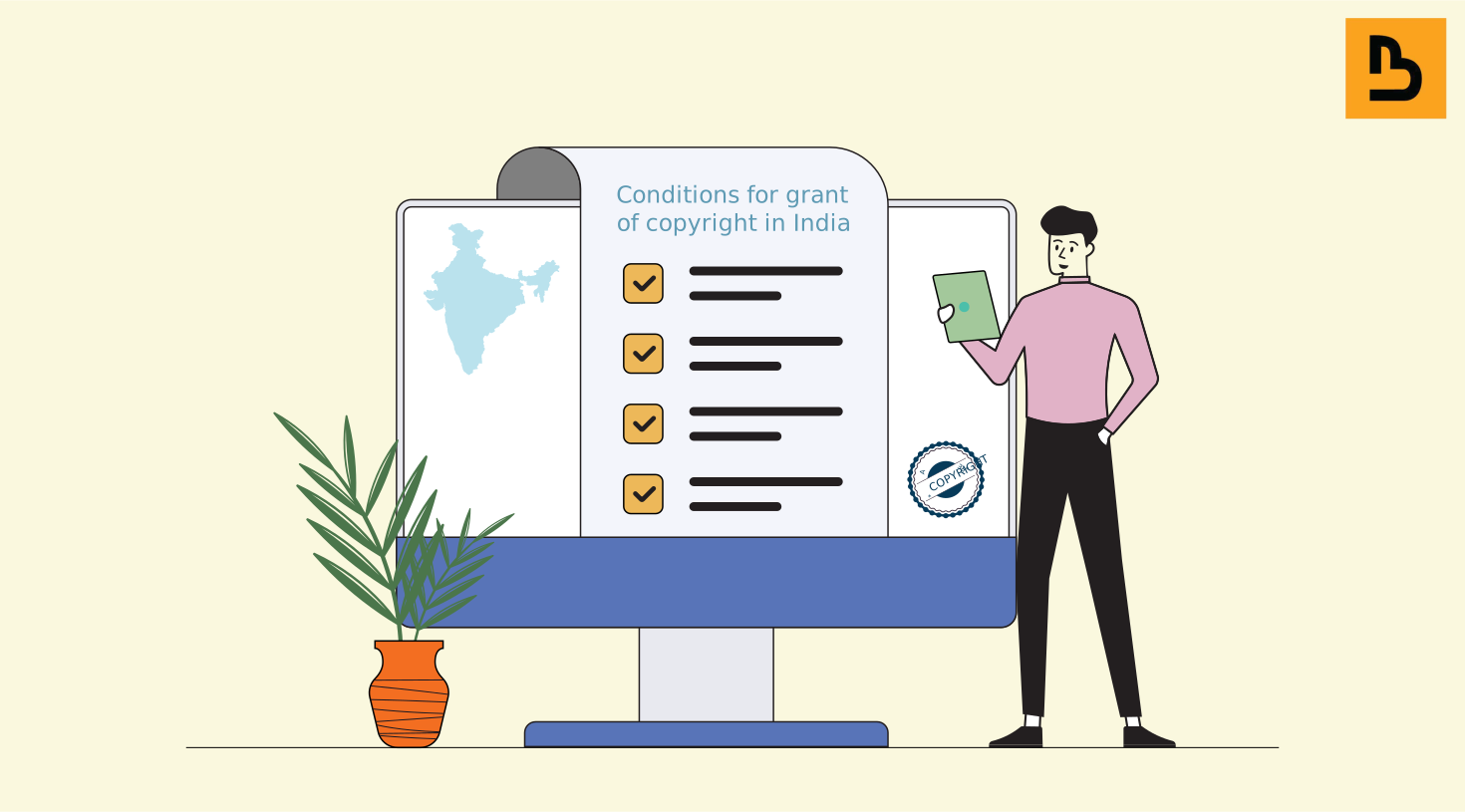
In India, the exclusive privilege of using a particular work belongs to its copyright holder, as per the provisions of the Copyright Act 1957.
These exclusive rights arise automatically for the creators of literary, dramatic, musical and artistic works, as well as cinematograph films and sound recordings; registration is optional. A registration certificate, though, serves as prima facie evidence in court of the particulars entered in the Register of Copyrights (Section 48).
Specifically, these rights encompass reproducing the material, sharing it with the public, translating it, adapting it, and other rights tailored to the nature of the content.
To utilise copyrighted content, one must secure permission from the rights holder.
There could be situations where someone isn’t sure if a specific work is under copyright protection or if it’s freely available in the public domain.
Moreover, there might be instances where someone wishes to identify the copyright holder to procure a licensing agreement.
Alternatively, there could be cases where a challenge to a copyright application is desired.
In these contexts, the publication of application details serves as a preemptive notice to anyone wishing to contest the applicant’s claim.
Anyone who wants to object can do so in writing to the Copyright Office, by post or online, within 30 days of the application being published.
The pivotal query in all these circumstances is determining how to reach the copyright holder and access details about the copyrighted material.
How to Check Copyright Status Online in India?
The Copyright Office’s online services are now reached through the Copyright section of the IP India portal (ipindia.gov.in), which links to the pages described below.
Fresh Applications
Details of newly filed copyright applications can be viewed on the “Fresh Application for Objection” page, which lists the applications still open to objections, newest first.
Each entry provides the diary number, submission date, title of the work, and the applicant’s name.
Upon submitting to the Copyright Registry, each application is assigned a unique diary number.
Moreover, you can view these applications sorted by month. In this setup, all submissions made in a specific month are gathered and presented in a downloadable PDF document.
You can access these monthly compilations under “Month-wise Applications.”
The PDF for each month displays the diary number, application date, work title, type of work, and the applicant’s name for every submission, beginning from the first day of the month.
Additionally, the monthly PDFs offer more specific details, such as the nature of the work – be it literary, dramatic, artistic, cinematograph film, or sound recording.
Looking Up Registered Creations
To find details about a previously registered copyright, head over to the “Search Work” page, which covers works registered since 2012. Here, you can narrow down your search using various criteria like Diary No, ROC Number, Applicant, and Title.
For instance, if you utilise the diary number for your search, the results will showcase the ROC number, work title, diary number, and the name of the applicant.
E-register
The E-Register provides a monthly compilation, available for download as a PDF file. You can access it via the “E-Register” link.
This register documents all the RoC released within a specific month. The PDF lists details such as the Diary No, RoC No, date, work title, category, and the name of the applicant.
These methods offer avenues to explore and retrieve information about copyrighted materials in India.
How Do I Check A Copyright for International Works?

Many countries have their own official databases, similar to the U.S. Copyright Office. Using these resources, combined with local expertise, can help verify copyright for international works.
How Do I Do a Copyright Search?
Searching for copyright information can be difficult without the right guidance.
Your primary resource should be the US Copyright Office, part of the Library of Congress, whose Copyright Public Records System holds registration and recordation records from 1978 onwards, plus searchable records of applications from 1898 to 1945.
Here’s a step-by-step guide on how to proceed:
- Begin at Copyright.gov: To access copyright records, start at copyright.gov, or go straight to publicrecords.copyright.gov.
- Dive into the Database: The Copyright Public Records System (CPRS) has replaced the old Online Public Catalog.
- Initiate a Basic Search: Type your query into the search bar on the home page to run a simple search.
- Specify Your Search Criteria: You can search by title, by name (of an author, claimant or publisher, for example), by keyword, or by a registration or document number.
- Review the Results: Use the filters to narrow the results, and open a record to see its details.
- Refining the Search: If the simple search doesn’t yield satisfactory results, try the Advanced Search page.
Should you find yourself struggling with the search, it might be wise to seek the expertise of a copyright attorney, as they can proficiently navigate the copyright database for you.
How to Do Copyright Search?
Searching through a public records copyright database may feel overwhelming. Here are some key pointers to streamline the process and yield optimal results.
Clarify Your Objective
Before diving in, pinpoint what you’re seeking. Your search approach hinges on your objective.
The online system mainly covers records from 1978 onwards. Tracking down older works takes a different strategy and can be more intricate.
Pre-1978 Copyrighted Material
Most records from before 1978 aren’t in the main database, but they are online in other forms: the Copyright Office’s Virtual Card Catalog has images of its 1870–1977 record cards, and the printed Catalog of Copyright Entries (1891–1978) has been digitised.
The original card catalog is kept by the Copyright Office at the Library of Congress in Washington DC.
Many libraries also hold printed volumes of the Catalog of Copyright Entries.
For a thorough search, the US Copyright Office will search its records for you for a fee; you can request an estimate first.
Precision is Key
Determine if you’re aiming to identify the work’s rightful owner or ascertain its public domain status.
In the US, works published in 1930 or earlier are now in the public domain, and each 1 January another year’s works join them.
Works published from 1931 to 1963 got 28 years of protection, which lasted 95 years in all only if the copyright was renewed; works published from 1964 to 1977 are protected for 95 years.
Generally, works published after 1930 may still be under copyright protection, so check the renewal records for anything from 1931 to 1963.
Seek Expert Assistance
Based on the intricacy of your search and the time you can allot to it, considering the expertise of an intellectual property or copyright lawyer might be beneficial.
While there’s a cost attached to their services, the time you save can be invaluable.
What’s Next?
Knowing how to verify copyright is essential for anyone dealing with any form of creative content.
Always check for a copyright notice as the first step to identify the original copyright owners.
Knowledge of copyright law is crucial to ensure the correct use of materials, be it a musical composition, an image, or any other tangible form of expression.
A significant aspect of copyrights is the protection it offers against potential infringements.
With the advent of the digital age, the Copyright Office records have become increasingly accessible. Using the database for copyright searches simplifies the process.
Moreover, online copyright records and online copyright applications have made it easier for artists to safeguard their work promptly.
Always ensure you’re on the right side of the law when using or sharing another’s creative output.
Use Bytescare comprehensive digital protection tools to detect and mitigate unauthorised distribution of your copyrighted material.
Ready to protect your copyrighted content? Contact us today and experience Bytescare’s solutions firsthand!
FAQs
How do you do a copyright check?
To perform a copyright check, start by visiting the official Copyright Office website of your country.
Most of these sites offer a public database where you can search for registered copyrights using various criteria such as title, author, or registration number.
Always remember that not all copyrighted works are registered, so a comprehensive search might also involve other avenues like checking libraries, publishers, or industry-specific databases.
How can I check copyright in India?
In India, you can check the status of copyrighted works by visiting the official website of the Copyright Office, India.
The site provides an online search feature where you can look up copyrighted works by title, applicant name, diary number, etc.
The E-register section of the site also provides monthly databases of copyrighted works in a downloadable PDF format.
How do you check if some name is copyrighted?
Names in themselves are not typically copyrighted; instead, they might be trademarked.
To check if a name is trademarked, you would visit the official trademark registry website of your country. In the U.S., for instance, you would use the United States Patent and Trademark Office’s (USPTO) online database.
For India, you would refer to the Controller General of Patents Designs and Trademarks website.
How do I know if a logo is copyrighted?
Logos, like names, are more commonly protected under trademark law rather than copyright. To check if a logo is trademarked, you can visit the trademark registry website of your country.
For instance, in India, you would visit the Controller General of Patents Designs and Trademarks website, while in the U.S., you can use the USPTO’s online trademark search tool.
How can I tell if an image is copyrighted?
Most images are automatically protected by copyright once they are created, even if they aren’t registered.
To check if an image is copyrighted, use reverse image search tools like Google Reverse Image Search to find the original creator.
For registered images, you can search in copyright databases, or contact the creator or platform where the image is posted to inquire about copyright status.
Do I need permission to use a copyrighted work?
Yes, you generally need permission to use a copyrighted work unless it falls under fair use (fair dealing in India), the public domain, or a Creative Commons license.
Contact the copyright holder or licensing body to obtain permission. Using copyrighted material without permission can lead to legal consequences, including fines and damages.